Abstract Tree Landscape Embroidery Review
A Designer’s First Look: Mood, Simplicity, and Stitching Personality
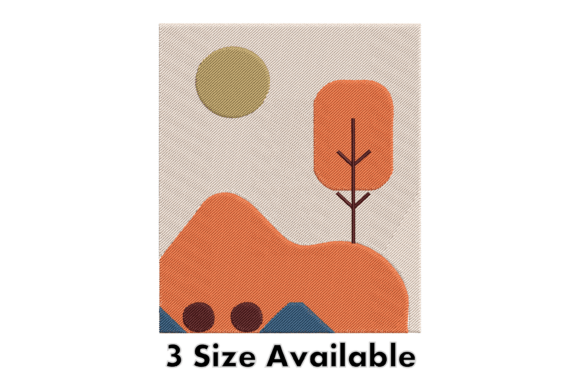
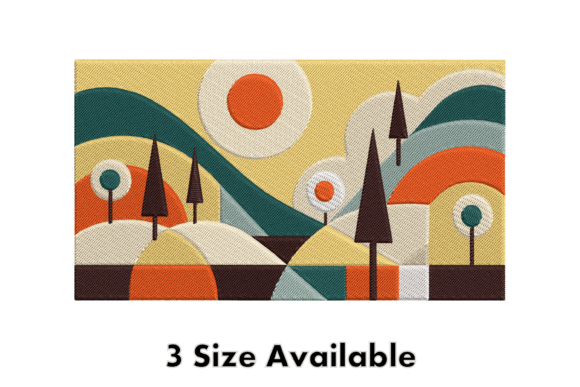
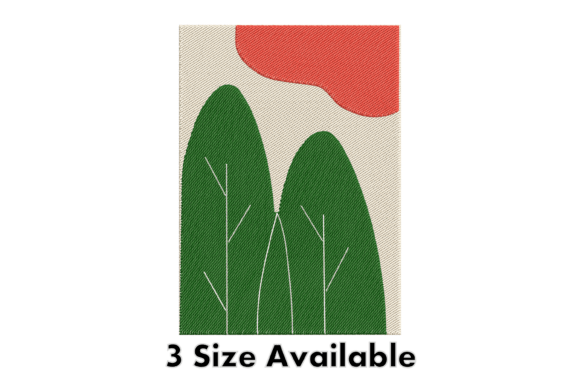
As an embroidery designer who’s stitched hundreds of forest-themed pieces—from delicate birch groves to dense woodland appliqués—I opened Abstract Tree Landscape Embroidery expecting something familiar. Instead, I got a breath of fresh air: tall, rhythmic tree forms rendered in clean, confident lines, floating against a softly textured, warm-toned background. There’s no clutter, no overworked detail—just intentional negative space, balanced weight, and a quiet confidence that reads as both modern and grounded. This isn’t a literal forest scene; it’s a distilled feeling—calm, rooted, quietly bold. That makes Abstract Tree Landscape Embroidery instantly versatile for handmade product lines where visual cohesion matters more than botanical accuracy.
Fits Naturally Into Real-World Projects
I immediately pictured this design on a natural canvas tote bag—its scale and organic warmth would elevate a simple cotton carrier into a curated, gift-ready item. But it doesn’t stop there. On a heavyweight unisex sweatshirt, the tall vertical rhythm echoes the garment’s structure. On a linen apron, the minimal line work avoids bulk while still reading clearly from across a kitchen or craft fair booth. Even on a baby blanket (using soft, low-density stitching and gentle stabilizer), the stylized trees read as soothing rather than busy. As a machine embroidery design, its strength lies in how little it demands—and how much it delivers visually. It’s not an applique design requiring fabric layering or intricate satin stitch borders. Instead, it leans into running stitch outlines and open fill stitch areas, keeping stitch density moderate and hoop time efficient.
Performance Across Fabric Types & Applications
In real project use, Abstract Tree Landscape Embroidery behaves predictably—but only when you respect its design logic. On stable, medium-weight fabrics like canvas, twill, or quilting cotton? Excellent. The clean lines hold shape, stabilizer support is straightforward (a light tear-away works well), and thread color contrast remains crisp. On stretchy fabric—like a lightweight French terry sweatshirt—I recommend basting the design first and using cut-away stabilizer underneath to prevent puckering along those long vertical stems. For dark fabric, test thread colors carefully: a muted sage or deep olive green reads richer than bright kelly green, and the warm background tone benefits from a slightly heathered or tonal fill stitch rather than solid black.
Curved surfaces—like caps—require extra attention. Because the design spans vertically, it fits best on front panels with generous hoop clearance. I’d avoid placing it too high on the crown unless your cap frame allows full hooping without distortion. For embroidered patches, the design scales cleanly across its three available sizes—ideal for creating cohesive sets (e.g., small patch for a keychain, medium for a tote, large for a pillow cover). And because the background is organic—not geometric—it masks minor registration shifts better than rigid patterns would.
What Works Well for Commercial & Handmade Sellers
- Etsy listings: Paired with a printable mockup, Abstract Tree Landscape Embroidery creates strong visual storytelling—especially in “modern nursery decor” or “minimalist lifestyle” collections.
- Craft fairs & boutiques: Its warmth and simplicity appeal broadly—no niche styling needed. Customers recognize quality craftsmanship without needing explanation.
- Personalized gifts: While it doesn’t include text, its clean composition leaves room for subtle monogramming or date stitching nearby—without competing visually.
- Brand consistency: If your shop uses earthy tones and organic shapes, this design reinforces your aesthetic without repeating motifs.
Practical Notes Before You Stitch
Before loading Abstract Tree Landscape Embroidery into your machine, do these five things:
- Test on scrap fabric that matches your final project’s weight and weave—especially if using textured linen or terry cloth.
- Check thread color contrast under natural and artificial light; warm backgrounds can mute greens unless thread has enough depth.
- Review stitch density in your embroidery software—if fill areas feel overly dense for your fabric, reduce density by 5–10% to improve drape and wash durability.
- Confirm hoop size for your chosen size variant; the tallest version may require a 5x7" hoop minimum, depending on file optimization.
- Verify licensing terms on the Creative Fabrica product page—this is essential before selling finished products, especially at scale.
Also, inspect small details after stitching: those fine branch tips should be sharp but not fragile. If they fray easily on your test run, consider switching to a finer needle (75/11) or adding a light topping stabilizer for the final pass.
How It Elevates Your Finished Product
Abstract Tree Landscape Embroidery doesn’t shout—it invites. That quiet confidence translates directly to buyer trust. When customers see thoughtful, unhurried design execution—clean lines, intentional spacing, harmonious color flow—they perceive higher value, even on modestly priced items like kitchen towels or pillow covers. In product photography, its warmth plays beautifully against neutral backdrops, reducing editing time and increasing social media shareability. For handmade shops, it supports storytelling: “designed for calm,” “rooted in simplicity,” “crafted for everyday moments.” And because it belongs to the Forest category without leaning into cliché (no owls, no acorns, no overly literal trunks), it feels fresh within a crowded market.
Final Thoughts for Designers & Sellers
If you’re evaluating Abstract Tree Landscape Embroidery for real project use—whether it’s a customer’s custom tote bag order, a seasonal Etsy drop, or a boutique’s exclusive apron line—know this: it’s a reliable, mood-forward embroidery file that rewards intentionality. It won’t solve every design challenge, but it excels where subtlety, scalability, and emotional resonance matter most. It’s not flashy—but then, neither are the best handmade products. They’re thoughtful. They’re consistent. They’re quietly unforgettable. That’s the space Abstract Tree Landscape Embroidery occupies—and why it earns steady rotation in my own digital embroidery file library.