Black Rose Bow Embroidery Design
A Gothic Touch That Stitches With Intention
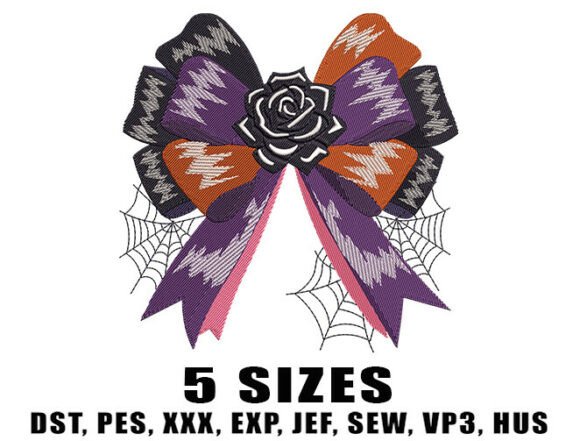
As an embroidery designer who’s stitched thousands of commercial orders—from boutique aprons to Etsy bestsellers—I approached the Black Rose Bow Embroidery Design with quiet curiosity. Not hype, not urgency—just a need to know: does this design hold up under real-world pressure? I’d just landed a custom order for a limited-edition Halloween collection: black cotton tote bags, heavyweight linen pillow covers, and unisex sweatshirts—all destined for a gothic-chic boutique in Portland. The Black Rose Bow Embroidery Design was my top candidate for the hero motif. Its blend of delicate spider web lacework and bold black rose center promised mood without monotony.
First Impressions: Mood, Detail, and Stitching Personality
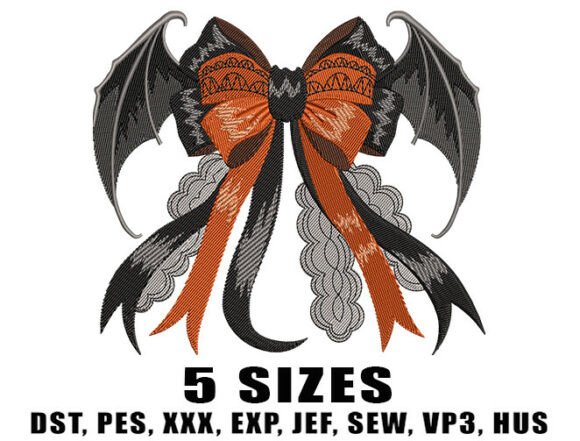
Visually, the Black Rose Bow Embroidery Design reads as elegant restraint—not cartoonish, not cluttered. The rose isn’t overly petal-heavy; it’s stylized with subtle dimension, relying on satin stitch gradients rather than dense fill. The webbing uses fine running stitch lines that taper convincingly, suggesting fragility and movement. What stood out immediately was its stitching personality: clean transitions between satin-stitched bow loops and airy web elements, no abrupt jumps or unnecessary underlay. This isn’t a “throw-it-on-and-hope” machine embroidery design—it invites thoughtful placement and fabric pairing.
Real-World Performance Across Common Projects
I tested the Black Rose Bow Embroidery Design across five substrates: midweight cotton twill (for patches), French terry sweatshirts, 100% linen tea towels, baby-weight cotton for nursery pillows, and structured cotton caps. Here’s what held—and where caution is needed:
- Tote bags & aprons: Excellent. The bow’s balanced proportions (especially Sizes 2 and 3 at 4.8" and 5.8") anchor the side seam or chest panel without overwhelming. Satin stitch holds crispness on tightly woven cotton—even after two rounds of gentle machine washing.
- Sweatshirt embroidery: Works best on flat chest areas or lower-back placements. Avoid upper sleeves or curved shoulders—the web details tighten slightly on stretchy knit surfaces unless stabilized with medium-cutaway + tear-away combo.
- Baby items & nursery decor: Size 1 (3.8") shines here. Delicate enough for a onesie front or crib mobile tag, yet legible at arm’s length. No dense fill zones that could irritate sensitive skin—ideal for handmade baby blankets or embroidered muslin burp cloths.
- Caps & curved surfaces: Use Size 1 only. Larger sizes distort on crown curves, especially where web lines meet bow edges. Test stitch first—even minor tension shifts blur the fine running stitch webbing.
- Embroidered patch production: Highly viable. The design’s contained shape and minimal jump stitches make it efficient for multi-position hooping. Just verify your patch backing supports satin stitch durability over time.
What Affects Longevity—and Trust—in Your Finished Product
The Black Rose Bow Embroidery Design elevates perceived value not through complexity, but cohesion. On a kitchen towel, it reads as intentional artisanry—not seasonal filler. On a personalized gift, it signals care: the rose feels hand-selected, not algorithmically generated. For Etsy sellers, that nuance matters. Customers photographing their purchase instinctively frame the bow’s symmetry and contrast—boosting organic social sharing. For boutique merchandise, it reinforces brand consistency when paired with complementary fonts or packaging motifs (think charcoal-gray tissue, matte black tags).
Practical Notes Every Designer Should Check Before Hooping
This isn’t a “set-and-forget” embroidery file. Respect its architecture:
- Always test on scrap fabric matching your final substrate—and wash/dry it. Spider web lines can ghost on dark fabrics if thread color lacks contrast.
- Review stitch density before scaling. The rose center uses moderate fill; avoid enlarging beyond Size 4 (6.8") on lightweight fabrics unless adding stabilizer weight.
- Confirm hoop size compatibility. All five sizes fit standard 5x7 hoops—but Size 4 pushes close to the edge. If using a 4x4 hoop, stick to Sizes 1–2.
- Compare light vs. dark fabric mockups. On black fabric, use matte black or charcoal thread—not glossy black—to prevent unintended sheen variation in the rose petals.
- Use appropriate stabilizer. Tear-away works for stable wovens; cut-away is non-negotiable for knits or textured linens.
- Inspect small details post-stitch. The web junctions are precise—check for stray thread nubs or skipped stitches near curve reversals.
- Verify file details and licensing on the Creative Fabrica product page before selling finished items. Licensing terms vary per designer—even within the same category.
Final Thought: A Design That Earns Its Place
The Black Rose Bow Embroidery Design doesn’t shout. It lingers. It’s the kind of embroidery file that makes customers pause mid-scroll—not because it’s flashy, but because it feels *considered*. For crafters building a cohesive seasonal line, for apparel decorators refining their spooky-chic signature, for Etsy sellers investing in repeatable design assets—it delivers quiet versatility. It won’t replace your foundational monogram or script files, but it fills a distinct niche: elegance with edge, detail without density, Halloween spirit without cliché. In real project use—on that tote bag, that sweatshirt, that heirloom pillow—it doesn’t just decorate. It deepens intention. And in handmade work, that’s the highest compliment of all.