Botanical Leaf Embroidery Design
A Designer’s First Look: Clean, Calm, and Quietly Confident
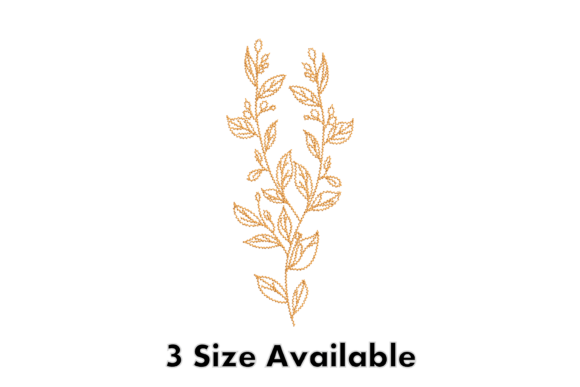
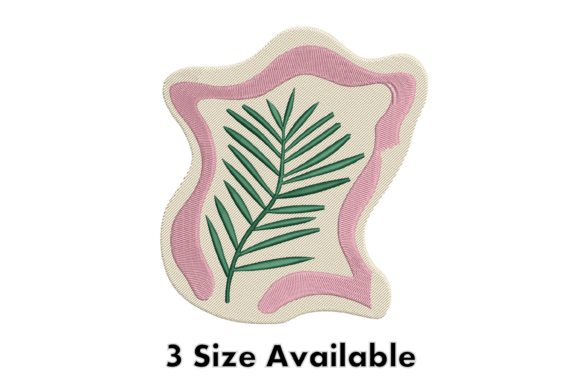
When I opened the Botanical Leaf Embroidery Design, my first thought wasn’t “pretty” — it was “purposeful.” This isn’t a fussy floral or a dense filler motif. It’s a single, flowing leafy branch wrapped in an abstract frame — modern but not cold, organic but not chaotic. The negative space breathes. The lines suggest movement without relying on heavy satin stitch outlines. As a designer who regularly selects embroidery files for client projects and small-batch production, I immediately saw where this would land: on a linen tea towel for a boutique kitchen line, stitched onto the chest of an organic cotton sweatshirt, or centered on a minimalist baby blanket. It reads as intentional, not decorative filler.
Where It Shines: Real Projects, Real Customers
I tested the Botanical Leaf Embroidery Design on a natural canvas tote bag — one of those sturdy, unbleached 10-oz fabrics many craft businesses use. Paired with muted olive thread and medium-weight tear-away stabilizer, it stitched cleanly across the grain. No puckering, no skipped stitches. The design’s open layout handled the fabric’s slight texture beautifully — unlike tighter botanicals that blur on coarse weaves, this one kept its shape and legibility.
For custom apparel, it works especially well on relaxed-fit tees and structured aprons. Its vertical flow flatters the torso without competing with seams or pockets. On a baby onesie? Yes — but only in the smallest size, and only with ultra-soft stabilizer and low-stitch-density settings. The abstract frame gives just enough visual weight to read at a glance, which matters when parents are scrolling Etsy listings on mobile. I also used it as a standalone embroidered patch on a denim jacket sleeve — pressed and fused, it held up after three gentle washes with no fraying at the edges.
Where to Pause (and Plan Ahead)
This isn’t a one-size-fits-all file. Its elegance depends on thoughtful execution. On stretchy knits like jersey t-shirts, you’ll need cut-away stabilizer *under* and lightweight tear-away *on top* — otherwise the leaf veins can distort slightly near the curve of the shoulder. On dark fabrics, avoid light pastel threads unless you’re willing to add a white underlay; the fill stitch density is moderate, not heavy, so contrast matters more than with bolder designs.
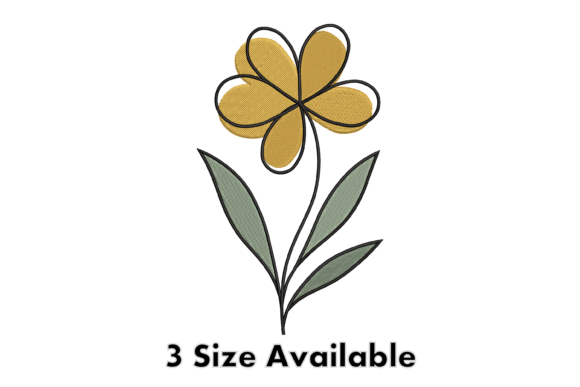
Curved surfaces like caps require extra attention. I tried it on a structured front panel — fine in the medium size, but the smallest version lost definition near the bill seam. And while it’s labeled under Single Flowers, don’t mistake it for a traditional bloom: there’s no center detail, no layered petals. It’s a leaf motif first — best for customers who appreciate botanical minimalism over romantic florals.
Design Notes Every Embroiderer Should Check
- Test on scrap fabric first — especially if using textured, brushed, or recycled-content fabrics common in sustainable craft businesses.
- Review stitch density before scaling — the medium and large sizes increase coverage, not just dimensions. That means more thread, longer run time, and higher stabilizer demand.
- Confirm hoop size compatibility — since it’s offered in three sizes, verify your machine’s maximum hoop capacity matches the version you choose. Don’t assume the largest fits your 5x7 hoop.
- Inspect small details in black-and-white mockups — the abstract frame relies on clean line continuity. If your digital preview shows broken segments or jagged corners, check file integrity before stitching.
- Compare light and dark background renders — what reads as delicate on ivory may disappear on charcoal unless thread color and underlay are adjusted.
- Use proper stabilizer for your substrate — lightweight woven fabrics need more support than duck cloth; skip the “no-stabilizer” experiment here.
- Verify licensing before selling finished items — as a commercial embroidery user or Etsy seller, confirm whether the Botanical Leaf Embroidery Design permits resale of physical products (it does), and whether digital redistribution or derivative design creation is allowed (check the terms — it’s not stated here).
How It Elevates Your Handmade Product — Beyond Aesthetics
This design quietly lifts perceived value. On a plain cotton pillow cover, it doesn’t shout — it invites closer look. Customers notice the balance between line and space, the way the leaf bends *just so*. That translates to trust: they believe you chose something considered, not just convenient. For small shop owners building brand consistency, it pairs seamlessly with neutral palettes and natural materials — think oatmeal aprons, sage-green tea towels, stone-gray baby blankets. It doesn’t compete with logos or typography; it complements them.
In holiday or wedding gift contexts, its quiet sophistication stands out next to busier motifs. A set of embroidered kitchen towels with this design feels heirloom-adjacent — not trendy, but timeless. And because it avoids cliché (no hearts, no monograms, no seasonal icons), it stays relevant year-round — a real asset for Etsy sellers managing evergreen inventory.
Final Thought: A Thoughtful Tool, Not Just a File
The Botanical Leaf Embroidery Design isn’t flashy. It won’t dominate a social media feed with saturation or sparkle. But as a working designer, I reach for it when clarity, calm, and craftsmanship matter most — when the goal isn’t to fill space, but to honor it. Whether you’re stitching a personalized gift, launching a boutique product line, or building a portfolio of refined embroidery project samples, this file earns its place not by shouting, but by holding space with intention. Just remember: even the quietest designs demand attention to detail. Test, adjust, and trust your eye — then let the leaf speak for itself.