Cardinal North Carolina Bird Embroidery
A Craft Fair Designer’s First Look: Bold, Local, and Instantly Recognizable
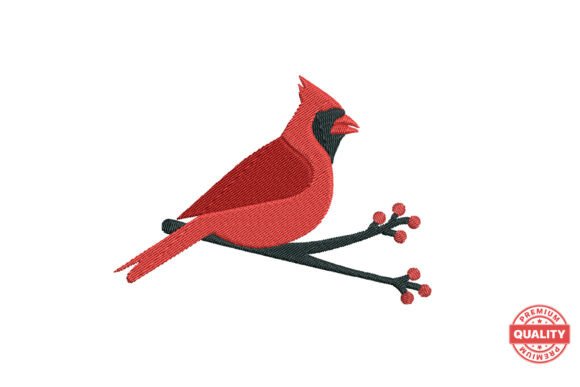
As an embroidery designer who’s packed, stitched, and sold at over 40 craft fairs—from Asheville to Raleigh—I opened the Cardinal North Carolina Bird Embroidery file with one question in mind: Will this stop someone mid-aisle? The answer? Yes—especially if they’re from NC, love native birds, or appreciate clean regional pride. This isn’t a generic red bird silhouette. It carries subtle Southern charm: balanced composition, confident posture, and just enough detail to read as “cardinal” without needing a field guide. It leans rustic-modern—not too folky, not too minimalist—and fits seamlessly into farmhouse kitchens, boutique apparel racks, and gift-shop displays. It feels premium but approachable—exactly what handmade shoppers reach for when they want meaning *and* craftsmanship.
Where It Shines: Craft Fair Product Pairings That Sell
In my booth setup, I test embroidery designs across six high-traffic items: tote bags, aprons, tea towels, embroidered patches, fabric pouches, and pillow covers. Here’s how Cardinal North Carolina Bird Embroidery performs:
- Tote bag design: A standout on natural canvas or oat linen—centered above the handle seam or scaled large on the front panel. Customers notice it from six feet away, especially paired with simple serif text like “NC Grown” or “Carolina Wild.”
- Apron embroidery: Ideal placement is left chest (3.5–4" wide) or lower right pocket. Reads beautifully on denim, duck cloth, or medium-weight cotton—no distortion, no stitch pile-up.
- Tea towel embroidery: Works best on flour-sack or waffle-weave towels when placed in the upper third. Avoids dense stitching near hems and maintains clarity despite fabric texture.
- Embroidered patch: Excellent candidate for iron-on or sew-on patches. Holds shape well at 2.75–3.25", and the cardinal’s crest and beak stay crisp—even after laundering.
- Fabric pouch & pillow cover: Scales beautifully up to 5". On linen pillow covers, it reads as intentional art—not filler. On drawstring pouches, it adds instant personality without overwhelming the small format.
What Holds It Back: Practical Production Notes
This isn’t a plug-and-stitch file. As a working embroidery designer, I flag three production considerations before cutting thread:
- Stitch density matters: Areas around the cardinal’s wing feathers and eye can run dense—test on scrap fabric first. If your machine hesitates or threads snag, reduce density by 5–8% in those zones. Over-stabilizing will flatten dimension; under-stabilizing risks puckering on lightweight fabrics.
- Small details need contrast: The beak and eye are expressive but tiny. Use high-contrast thread (e.g., black on white, navy on cream) to preserve legibility—especially on dark fabric or textured tea towels where detail vanishes easily.
- Curved surfaces demand testing: Don’t assume it works on caps without mockups. The cardinal’s profile flattens on curved crowns unless digitized with gentle underlay and reduced fill angles. Skip cap embroidery unless you’ve confirmed hoop compatibility and stitch flow on a real blank.
Online & Offline Impact: From Booth to Etsy Listing
For Etsy sellers and digital embroidery file shops, Cardinal North Carolina Bird Embroidery is quietly powerful. It photographs cleanly—no busy background needed. A single printable mockup (linen tote + natural light) converts browsers faster than five styled photos. It also supports brand consistency: pair it with other regional designs (e.g., “Blue Ridge Fox,” “Outer Banks Heron”) to build a cohesive Birds collection that tells a story beyond stitches.
In person, it drives engagement. At last month’s Durham market, I watched three customers pause, point, and say, “That’s *my* bird.” That emotional hook—local identity, wildlife appreciation, quiet pride—is why this sells as both a craft fair product *and* a small shop product. It doesn’t shout. It resonates.
Design Integrity Checks Every Embroiderer Should Run
Before committing to batch production—or listing it as a commercial embroidery file—run these checks:
- Test the Cardinal North Carolina Bird Embroidery on your most common fabric: cotton twill, linen blend, and medium-weight canvas.
- Verify thread colors against your standard palette—does red pop? Does gray for shadowing read as depth, not mud?
- Review spacing between elements: does the cardinal’s tail clear the edge of typical hoop sizes (4x4, 5x7)?
- Inspect jump stitches and trims—clean digitizing means fewer thread breaks during long runs.
- Confirm stabilizer match: tear-away for stable fabrics, cut-away for knits or stretchy blends.
- Create at least one finished product mockup—not just a screen preview. Real fabric changes everything.
- Compare colorways: does it hold up on ivory, charcoal, sage, and navy? If not, adjust thread selection before finalizing design assets.
- Double-check licensing: if selling finished products (not just the digital embroidery file), ensure the Cardinal North Carolina Bird Embroidery includes commercial use rights.
Final Verdict: A High-Return, Low-Risk Craft Fair Staple
This isn’t just another bird embroidery. The Cardinal North Carolina Bird Embroidery balances regional authenticity with versatile design language. It elevates a basic tote into a keepsake. It turns a plain apron into a conversation starter. It gives handmade gifts emotional weight without sentimentality. For Cricut crafters adding embroidery layers, for boutique makers curating local collections, and for Etsy sellers building recognizable design assets—it delivers consistent visual appeal, strong buyer engagement, and real booth display strength. Just remember: test early, stabilize wisely, and let the cardinal speak for itself. Done right, this machine embroidery design doesn’t just sell—it connects.